Seattle Teacher Residency Program (STR)
Applications Are Closed
Thank you for your interest in the Seattle Teacher Residency (STR) Program. STR is not currently accepting applications while program leadership reviews program planning and offerings. We anticipate sharing additional information by December 1. Prospective students are encouraged to check back for updates and explore other Teacher Education Program pathways.
What you can earn
Duration
Credits earned
Format
Time commitment
A community of educators with a fierce passion and commitment to equity
The Seattle Teacher Residency (STR) program prepares you to become an elementary or special education teacher within the Seattle Public Schools system in a Title I setting. STR combines classroom practicum with aligned, graduate-level coursework and a rigorous resident/mentor partnership. Graduates emerge with a solid foundation in research-based teaching practices and a profound understanding of the curricula and resources used in Seattle schools.
Curriculum
Overview
STR is a five-quarter, 14-month residency program. It begins in late June with two months of summer coursework, followed by a full academic year in a Seattle Public Schools classroom with an experienced mentor, where Residents connect theory and research to local district goals and classroom practice.
Residents complete UW coursework throughout the program:
- Summer quarters: Monday–Friday, all day
- Fall, Winter, and Spring quarters: in school placement Monday–Thursday; UW coursework all day Friday; additional coursework on Wednesday evenings
Residents follow the Seattle Public Schools calendar for school breaks and holidays, and the UW academic calendar for graduate coursework. The program is full time and intensive, with school-year days sometimes lasting up to 12 hours. Working outside the program is not encouraged.
Residents who successfully complete the program may walk at UW’s June graduation ceremony, and the program concludes in mid-August of the second summer quarter.
We also prioritize your physical and mental health. If you feel overwhelmed, sick, or need support with coursework, coaches and mentors are available to help.
Courses
The following sequence is an example of the courses you might take with your cohort. Courses and order is subject to change.
- Quarter 1: Summer
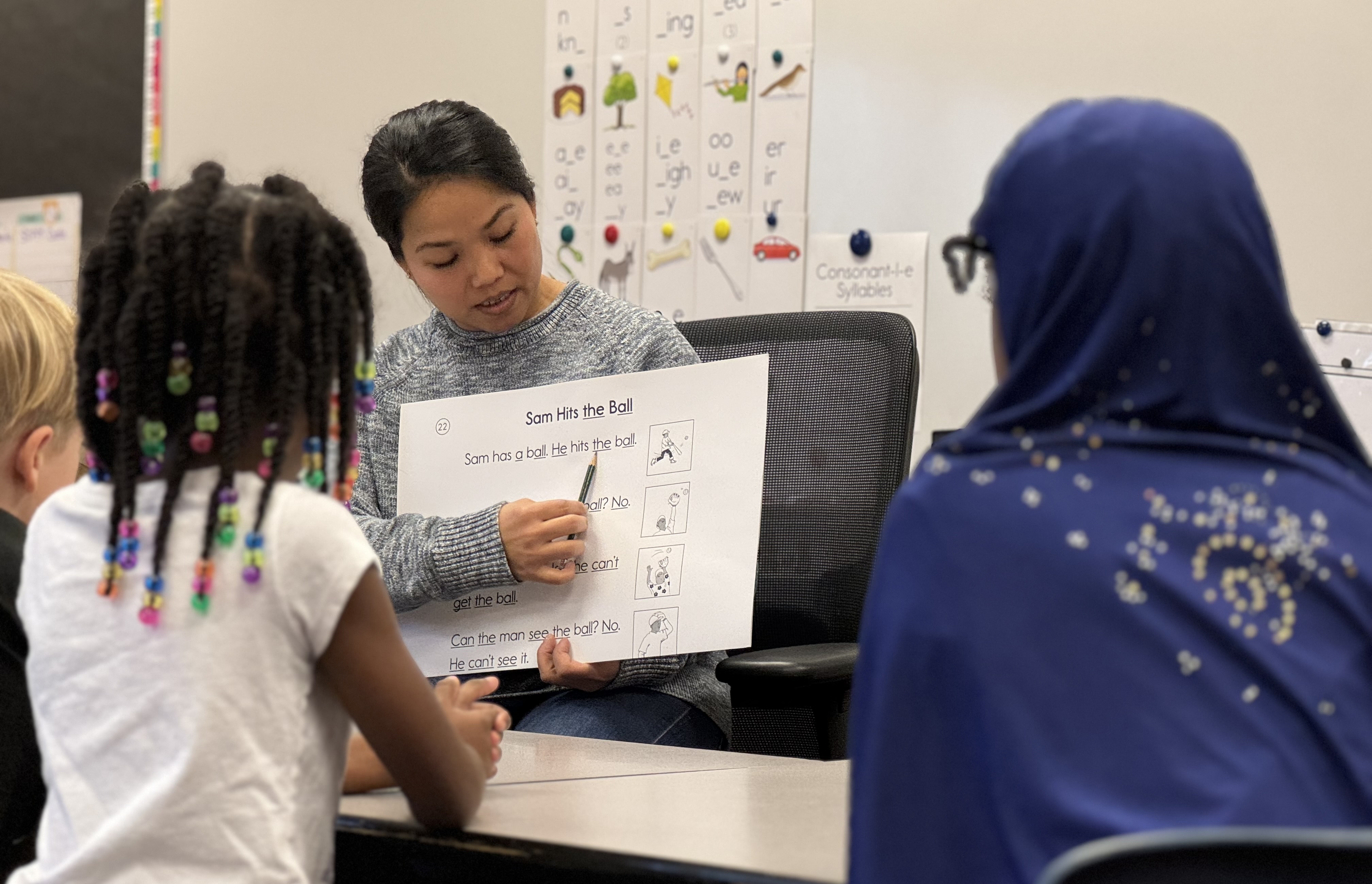
Residents begin the program and immediately start working with students at an elementary summer school in Seattle Public Schools.
Residents take coursework in methods of teaching literacy, mathematics, social studies and science as well as foundational coursework for working with English language learners (Multilingual learners) and students with disabilities. Theory and best practices are directly implemented in their work with students.
- Quarter 2: Autumn
Starting from the first day of their Seattle Public School placement school, alongside their Mentor teacher, Residents begin developing relationships with students while learning to develop a classroom community. Throughout the week, Residents are planning, co-teaching, pulling small groups for differentiation, and creating connections with families and colleagues.
Residents will also continue UW coursework, continuing to develop strategies and skills around teaching literacy, mathematics, science, and social studies.
- Quarter 3 & 4: Winter & Spring
During winter and spring quarters, Residents continue in their placement with their Mentor teacher. They co-plan and co-teach with their mentor teacher on a daily basis and continue to hone their practice while working with their students.
Residents will take on Lead Teaching during each program quarter. During Lead Teaching, Residents are responsible for the bulk of the lesson planning and teaching while their Mentor teacher and Coach provide targeted feedback and support.
- Quarter 5: Summer
The second summer quarter includes UW coursework related to residents endorsement.
Admission requirements and process
Overview
Applications for each cohort typically open on September 1 and close in early December. After an application is submitted, materials are reviewed by the STR Admissions Committee, and the file review process generally takes several weeks to complete. Applicants who successfully pass File Review will be invited to participate in Interview Day.
View all application materials here.
Interview Day is typically held in February and is a required part of the selection process. During this full-day event, applicants meet with STR staff, mentors, alumni, and community partners, and participate in a variety of activities designed to assess mutual fit with the residency program. Interview Day is generally held in person.
For applicants who are located outside the area, including those from out of state or outside the country, an alternative virtual interview option may be available.
Please note: Application deadlines, interview dates, and other program timelines are subject to change each year.
Requirements
Our ideal Resident candidate brings the following attributes to the program:
- A passion for serving students from diverse backgrounds
- A strong commitment to social justice and equity
- A deep belief that ALL students can learn and deserve an equitable education
- An urgent sense of responsibility for student learning
- A learner stance and commitment to ongoing reflection, collaboration and communication
- Organizational skills in time management, planning, scheduling, coordinating resources, and meeting deadlines
- Resilience, perseverance, and openness to ask for support – especially when faced with challenges
- Have volunteered in or have prior work experience in a) organizations that serve the academic, emotional, physical, social need of diverse students; b) in urban schools; c) serving K-12 youth
- Family, community and/or work experiences reflective of intentional commitments to access and equity
Materials
- Application Fee
A $90.00 application fee is required and must be paid by credit card through the online application system.
Fee Waiver: The Graduate School offers a limited number of application fee waivers to qualified applicants. Application fee waiver requests must be made at least seven (7) days before your program’s application deadline to allow time for review. Who is eligible? Application fee waivers are available to U.S. citizens, permanent residents, and undocumented applicants who demonstrate financial need or hardship.
- Bachelor’s Degree from an Accredited Institution
A bachelor’s degree is required for admission to the program. Your degree may be in progress at the time of application, but it must be completed before the program begins.
- Unofficial Transcript(s) (Minimum 3.0 GPA)
You must submit unofficial transcript(s) with your application from every college or university where you earned academic credit. The UW Graduate School requires a cumulative GPA of 3.0, or a 3.0 in your most recent 90 graded quarter credits (60 semester credits). GPA is only one part of the application review.
Applications are reviewed holistically, and we encourage you to apply even if your GPA is below 3.0. You do not need to take additional coursework to raise your GPA. Instead, focus on submitting a strong goal statement that explains your interests and how the program aligns with your professional or personal goals, along with strong letters of recommendation. You are also welcome to provide context for a GPA below 3.0.
If you are currently enrolled in a college or university and have not yet graduated, please upload a transcript showing your most recently completed term. A final transcript confirming completion of your degree will be required before the program begins, if admitted.
- Two Letters of Recommendation
Submit at least two letters of recommendation that address academic potential, leadership, collaboration, and adaptability. Enter your recommenders’ contact information in the online application; they will submit their letters electronically via a provided link. If you are employed as an Instructional Assistant or Paraeducator, one letter must be from a direct supervisor.
- Resume/Curriculum Vitae (CV)
A current academic and professional resume or CV is required. It should summarize your education, work, and volunteer experience, as well as relevant honors (e.g., Dean’s List), scholarships, awards, publications, presentations, and other achievements.
- Include education, work, and volunteer experience
- Highlight qualifications and skills aligned with the program
- Emphasize experience working with children or supporting marginalized communities
- Provide dates, locations, and clear descriptions of responsibilities and accomplishments
- Use active verbs to describe your work and impact
- Ensure the document is well-organized, error-free, and professionally written
- Statement of Purpose
Please respond to each of the following prompts in 1-2 pages (300-500 words).
- Describe your interest in education. Include your perspective on what you believe education, learning, development, and participation in society are. Draw upon specific personal experiences that have shaped your thinking.
- Summarize relevant personal, academic, and/or professional experiences, including any direct work with youth or in educational settings. We are particularly interested in concrete examples that illustrate your role, your thinking in the moment, and what you learned.
- If applicable, describe experiences working with individuals from diverse cultural, social, linguistic, or learning backgrounds. Reflect on how these experiences have influenced your beliefs, practices, or growth over time.
- Explain how your background, skills, and experiences have prepared you for graduate study in education. Highlight relevant work or volunteer experiences, skills, or knowledge gained through self-directed learning, professional development, certifications, or training.
- Personal History Statement (Optional)
Consistent with our goal of enhancing the intellectual and social enrichment of the University community, the University of Washington actively seeks and welcomes students from diverse backgrounds. Please provide a statement, no more than two pages in length, about your personal history, family background, and other influences on your intellectual development. The statement should address educational, cultural, and economic opportunities and disadvantages that you have experienced, and ways those experiences have affected the development of your special interests, career plans, and future goals.
Please note that this is not an academic Statement of Purpose, but a personal statement that addresses your intellectual growth and development, both inclusive of and beyond your academic goals.
- Basic Skills Test
Candidates must include basic skills test scores covering reading, writing and math with their application.
If you have a copy of your score report you should upload this with your application and won’t need to have them sent electronically. Official scores are only needed if you don’t have a score report or if you haven’t previously submitted scores to UW as an undergraduate. If you must order scores, we recommend sending them to yourself and uploading them to your application or sending the College of Education your copy.
Basic skills can be met through:
- WEST-B
- Praxis I
- CBEST
- ACT (Older scores that do not include a writing subtest can be used for reading and math but must be supplemented with a writing subtest. If needed, contact ACT at 319-337-1270 to order your score report.)
- SAT (Older scores that do not include a writing subtest can still be used for reading and math but must be supplemented with a writing subtest. If needed, contact College Board at 866-756-7346 to order your score report.)
The state does not require a minimum passing score for the basic skills subtests.- Seattle Public Schools Seattle Teacher Residency Application
In addition to the UW Graduate School application, you must submit the Seattle Public Schools Seattle Teacher Residency Application. This application will ask for your resume and references; you may use the same ones as used for the UW Graduate School application.
BEFORE STUDENT TEACHING:
- Content Knowledge Test
These tests are not required at the time of application but must be passed before beginning full-time student teaching.
All admitted students are required to pass the NES 102/103 (Elementary Education (Subtests I and II)).
Students pursuing an endorsement in Special Education, or English Language Learners must also pass the following exams:
- Special Education: WEST-E 070 - Special Education
- English Language Learners: WEST–E 051 - English Language Learners
Submitting
- Gather all required documents
- Visit the Graduate School website
- Log into your account or create a new profile if you are a first-time applicant
- Complete all steps in the application process and upload your documents
- Pay the nonrefundable $90 application fee
- You may request a fee waiver during the application process
- Submit your application
- SUBMIT THE SEATTLE PUBLIC SCHOOL STR APPLICATION. In addition to the UW Graduate School Application, you must also submit the Seattle Public Schools Seattle Teacher Residency Application.
When completing your application, you will select the following options for the Program Selection:
- Select your application type
- Select 'Graduate'
- Narrow Your Search
- Select 'By Degree'
- Select 'Master's'
- Select your Program:
- Education - Seattle (MIT - Teacher Education - Elementary Seattle Teacher Residency)
Next Steps
International
Unfortunately, this program cannot support international students. The design of a residency program is to train teachers who will then go work in a district classroom as employees. Per Seattle Public Schools’ guidelines, STR residents must be eligible to work in the United States.
Costs and funding
Estimated Costs
In addition to the university's tuition Non-Resident Differential waiver and state or federal loans and grants, residents may be able to receive financial support for unmet tuition need to participate in the program.
Instructional Assistants (IAs) pursuing the Special Education pathway who retain their employment in Seattle Public Schools during the residency year will receive 50% tuition coverage from the district. Residents from the Academy for Rising Educators (ARE) receive full tuition coverage from the district.
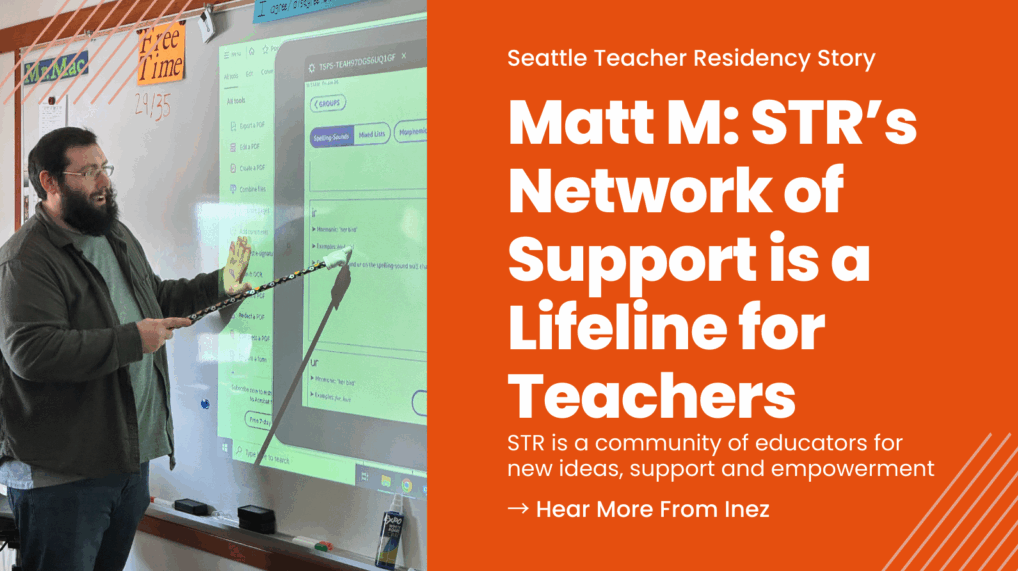
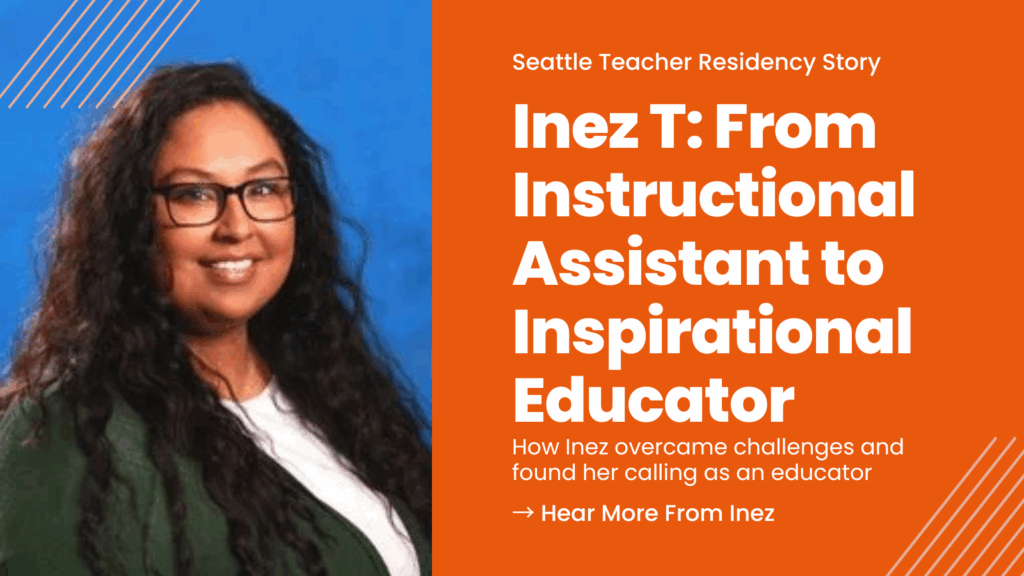
Seattle Teacher Residency Stories
Seattle Teacher Residency Testimonial Video Series:
Seattle Teacher Residency Blog Series: